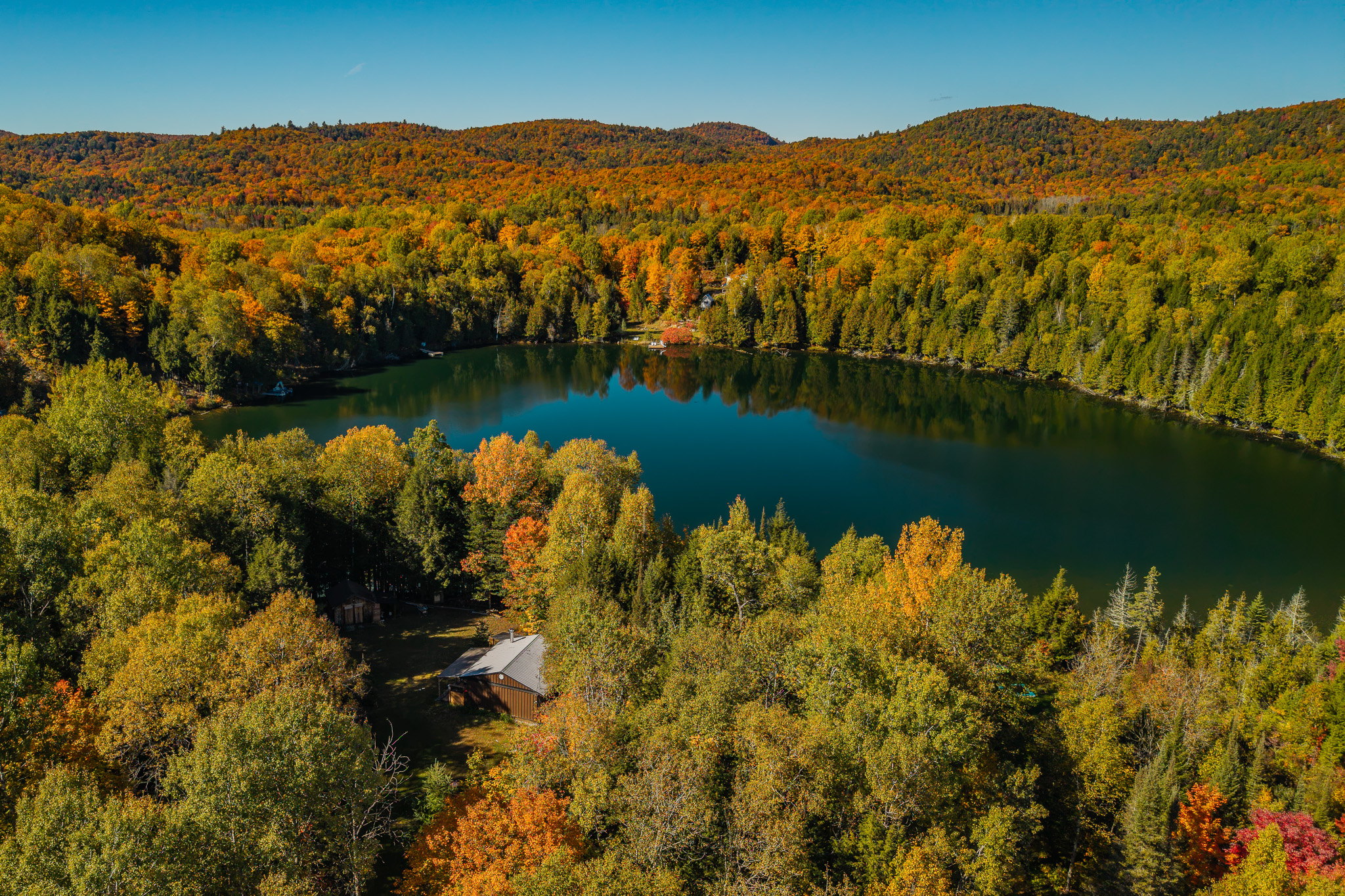
Some lake love stories start beautifully and get complicated over time. Not because of the neighbours or the road. Because of the lake itself.
When you buy a waterfront property in the Outaouais, you're not just buying land and a house: you're entering into a relationship with an ecosystem. Understanding its health before you sign may be one of the smartest decisions you make.
The Three Main Categories of Lakes
Scientists classify lakes by their nutrient levels, primarily phosphorus, and the effects those levels have on aquatic life and water clarity. There's a continuum, but three categories do a good job of mapping the range.
Oligotrophic: The Gold Standard
This is the benchmark lake. Low nutrients, very clear water, minimal algae growth, visible bottom at depth. These lakes are typically surrounded by mature forest, removed from agricultural land, and relatively lightly developed. Their watersheds tend to be in good health.
In the Outaouais, several lakes in more remote municipalities, including Lac-des-Plages, Chénéville and Val-des-Bois, retain an oligotrophic character. That's a genuine asset, both for quality of life and for long-term property value.
Mesotrophic: The Middle Ground
Richer in nutrients, a mesotrophic lake offers slightly less transparency, more aquatic vegetation, and more biological activity. This isn't necessarily a sick lake. It's often one in natural transition, or one that's inherently more productive. Fishing can be excellent, and swimming is generally fine.
What matters here is trajectory. A mesotrophic lake surrounded by conscientious property owners and an active lake association can stabilize. One under pressure, from dense development, fertilizer runoff or failing septic systems, can tip toward eutrophication.
Eutrophic: The Warning Zone
A eutrophic lake is overloaded with nutrients. The water is often murky or greenish, aquatic plants are abundant, and this is where cyanobacteria blooms (formerly called blue-green algae) are most common.
Cyanobacteria are more than an aesthetic nuisance. During a bloom, they can produce toxins harmful to humans, young children, and pets. A no-contact advisory can last weeks, sometimes an entire summer.
Cyanobacteria: A Signal You Can't Ignore
Quebec's Ministry of the Environment (MELCCFP) monitors at-risk water bodies and publishes public advisories when cyanobacteria are detected. Their directory of affected lakes is publicly accessible online.
What few buyers know: a lake with a history of cyanobacteria advisories carries that record in public registries. That history can affect property values, seasonal usability, and in some cases even insurance coverage.
Before you buy, check whether the lake appears in the MELCCFP's historical directory.
Lake Associations: Your Best Resource
Here's one of the best-kept secrets of waterfront buying. In many Outaouais municipalities, residents have organized into lake associations. These volunteer-driven organizations do remarkable work.
In practice, they:
- Conduct regular water quality monitoring (Secchi disk transparency, phosphorus levels, cyanobacteria presence);
- Archive years of data, making it possible to track the lake's trajectory over time;
- Educate property owners on best practices (riparian buffers, septic maintenance, runoff control);
- Partner with municipalities to advocate for the lake's health.
Reaching out to the local lake association before buying can give you access to years of data you won't find anywhere else. These people know their lake better than anyone. They can tell you whether it's stable, whether problems have been observed, and what restoration work is underway.
Practical tip: If the lake has no association, ask the municipality or MELCCFP about existing monitoring for that water body.
The Right Moves Before Making an Offer
Buying on the water requires additional due diligence compared to an urban purchase. Here's what we consistently recommend to our clients:
- Identify the lake's trophic category Ask your broker or consult MELCCFP public data. APCIQ also publishes useful resources on rural property purchases.
- Review the cyanobacteria advisory history The Quebec government's registry is public and searchable. A clean record over ten years tells a very different story than three advisories in five.
- Contact the lake association (if one exists) This is one of the most valuable steps you can take. Their response will also give you a sense of the governance culture around the lake.
- Study the watershed A lake surrounded by protected forest, with no intensive agriculture nearby and relatively sparse waterfront development, is generally healthier than one ringed by close-cropped lawns and blocked drainage ditches.
- Inspect the septic system A failing septic system discharges directly into the lake. Beyond the legal implications, it's a phosphorus source that accelerates eutrophication. Require an inspection and, if the system is aging, factor in the cost of upgrading to current standards.
- Understand municipal zoning regulations Some municipalities have specific zoning rules for shorelines and floodplains. The protected riparian buffer (typically 10 to 15 metres) limits what can be built or modified along the water's edge. OACIQ offers resources to help you understand your rights and obligations as a buyer.
A Healthy Lake Is Also a Sound Investment
A healthy lake is more than a seasonal pleasure. It's an asset. Waterfront properties on clear, stable lakes have historically maintained their value and appreciated better than those on degraded water bodies. According to JLR, real estate transaction data confirms that a property's immediate environment is one of the most decisive factors in how its value evolves over time.
Conversely, a lake with compounding problems can lead to usage restrictions, reduced buyer appeal, and downward pressure on resale prices.
Choosing your lake with open eyes is also giving yourself the best chance of selling well someday.
We Can Guide You Through This Process
At L'immobilier en toute sérénité, we know the Outaouais territory, its lakes, its municipalities, and its rural particularities. Whether you're looking for a cottage, a secondary residence, or a waterfront lot, we help you ask the right questions before committing.
Gabriel Bélisle-Dupuis Residential Real Estate Broker | L'immobilier en toute sérénité 819-328-7173 | info@gabrielbelisledupuis.com