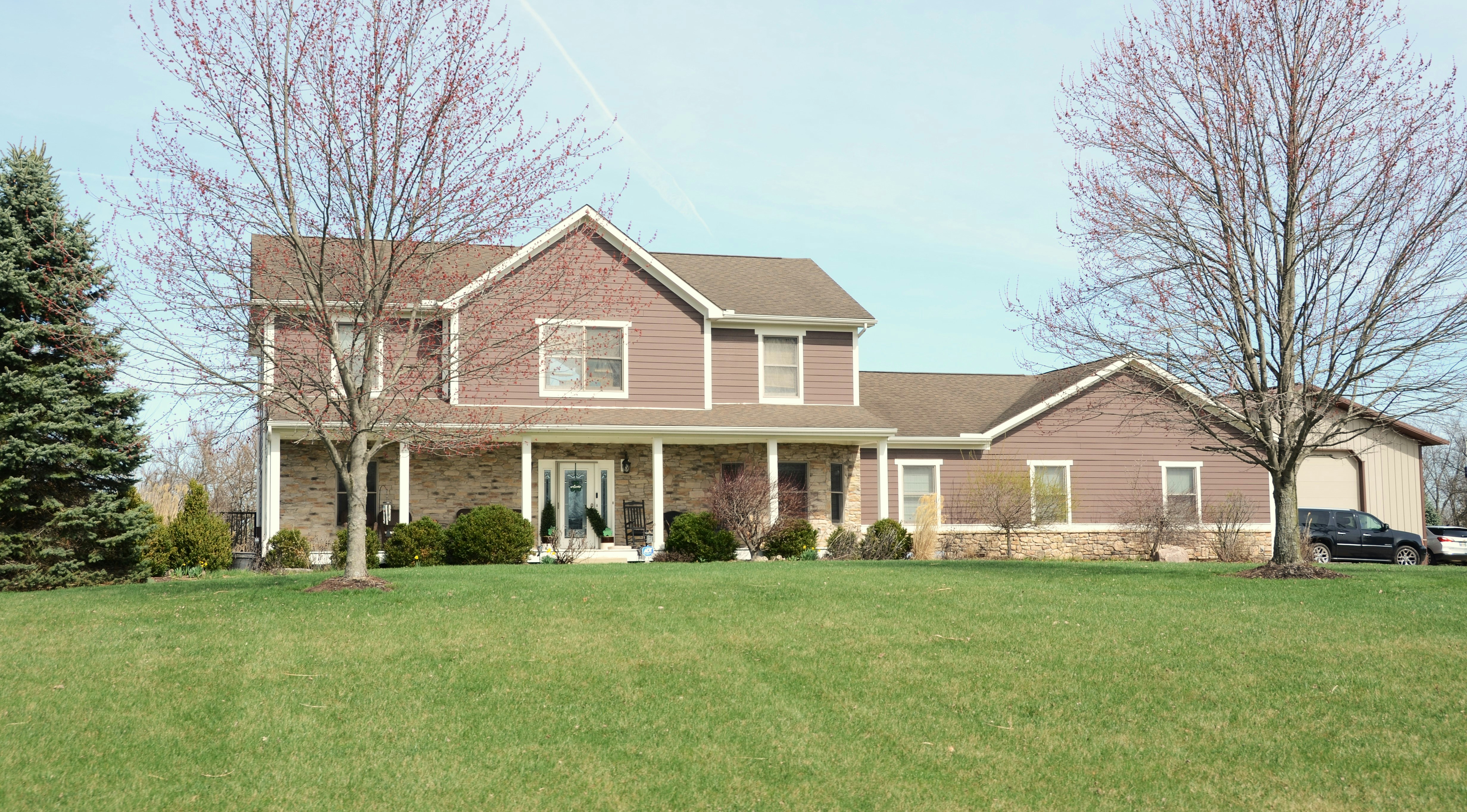
Over the past five years, the median price of single-family homes in Quebec has risen by 67%. For many families in Outaouais, the multigenerational home has become a natural response to that reality, as much out of solidarity as out of necessity.
But this type of purchase comes with its own set of rules. Here is what you need to know before taking the leap.
What Is a Multigenerational Home, Exactly?
A multigenerational home, also called a bigenerational or intergenerational home, is a single-family residence that includes two distinct, self-contained units under one roof. Each unit has its own living space and, critically, its own private entrance. It is that requirement for separate access points that legally distinguishes a multigenerational home from a simply finished basement.
Configurations vary: a basement apartment, a studio above the garage, or two distinct wings connected internally. The goal is always the same: allow two generations to live together while each preserves their autonomy.
According to Revenu Québec, a multigenerational home is generally considered a single-family dwelling, but that designation is not automatic, and that is where things get complicated.
Multigenerational Home or Duplex: What Is the Difference, and Which One Is Right for You?
This is one of the most common questions. Both property types have two separate units. Both can house more than one household under the same roof. Yet they are fundamentally different products, and the right choice depends entirely on what you are trying to accomplish.
The Legal Distinction
A multigenerational home is recognized as a single-family residence in which an accessory unit has been created. On the municipal assessment roll, it appears as a single property with a single civic address. It is designed for a family, not for independent tenants.
A duplex, on the other hand, is a two-unit income property. It may have two distinct addresses or one, but its primary purpose is rental income. It is assessed and treated fiscally as an income-producing property, and that changes quite a lot.
The Difference at Purchase: Financing and Down Payment
This is where the distinction becomes very practical.
For a multigenerational home, financing follows the rules for a principal residence. If you live there and the price qualifies, you can access a down payment as low as 5% with CMHC mortgage insurance. The property is treated as a residential purchase, not an investment.
For an owner-occupied duplex, the rules are similar: minimum 5% down for the first $500, 000, then 10% on the excess, provided you live in one of the two units. If you do not occupy the building, the down payment rises to 20%. That is the threshold for conventional financing, without mortgage insurance.
In short: if your budget is tight and you plan to live in the property, both options can be accessible with a reduced down payment. But the conditions vary by financial institution, and the tax context is very different.
The Difference at Resale: Capital Gains
This may be the most important point to understand before buying.
The multigenerational home aims to preserve principal residence status, which can, under certain conditions, allow you to benefit from the capital gains tax exemption at resale. As noted earlier in this article, that exemption is not automatic: the co-ownership structure and the financial arrangements between occupants are determining factors.
The duplex is treated partly as an income property as soon as one unit is rented. At resale, the rental portion will be subject to capital gains tax, proportional to the area or value of the rented unit. This is not necessarily a disadvantage, especially if the goal is to generate a return, but it is a tax reality to factor into your calculation from the outset. Consult a notary or tax advisor to evaluate your specific situation.
So, Which One Should You Choose?
Here is a simple way to think about it.
A multigenerational home is right for you if your primary motivation is family: keeping loved ones close, sharing costs with family members, or providing an independent unit for aging parents. Proximity is at the heart of the project, and the property is conceived as a home, not as a yield-generating asset.
A duplex is better suited if you want to generate rental income with an external tenant, build a real estate portfolio, and benefit from the tax deductions associated with rental properties. It is a first step toward real estate investment, with all the advantages and responsibilities that entails, including the obligations of Quebec's residential tenancy legislation under the Tribunal administratif du logement.
Both can coexist within the same long-term strategy. Some clients start with a multigenerational home for the flexibility, then convert or acquire a duplex as their situation evolves. What matters is making the choice with a full understanding of the implications, and having the right guidance to do so.
Why Demand Is Growing in Outaouais
Outaouais is a region with its own distinct reality. It encompasses dense urban neighbourhoods in Gatineau alongside rural municipalities spread across the MRCs of Papineau, Les Collines-de-l'Outaouais, La Vallée-de-la-Gatineau and Pontiac. That diversity creates very different needs from one family to the next.
In the first quarter of 2026, according to APCIQ and the Chambre immobilière de l'Outaouais, 936 residential sales were recorded in the Gatineau CMA. The market is entering a rebalancing phase: listings rose 18% year-over-year, giving buyers more choice. The median price of single-family homes stood at $489,950, stable compared to the prior year. The market nonetheless remains a seller's market, with selling times staying short. It is in this context of sustained price pressure that multigenerational homes continue to gain ground as a concrete solution for families.
In rural areas especially, multigenerational living responds to a practical reality that goes well beyond budget: services for seniors are less accessible, distances are long, and keeping aging parents close becomes a question of safety as much as affection. By combining two household incomes to support a single mortgage, families also expand their purchasing power and access properties they could not afford on their own. It is rarely one reason or the other, both realities reinforce each other.
The Canada Mortgage and Housing Corporation (CMHC) recognizes the evolving demand for multigenerational housing, and financial institutions are progressively adapting to these realities.
The Concrete Benefits
Shared costs. This is often the primary motivation. Mortgage payments, municipal taxes, maintenance, heating, all of these expenses are shared between two households. For a first-generation buyer, it can be the only realistic path to homeownership in a competitive market.
Proximity and mutual support. Childcare, support for aging parents, snow clearing in winter, multigenerational living creates a natural chain of solidarity that concretely improves quality of life for everyone involved.
Long-term flexibility. A well-designed property can adapt. The secondary unit can house parents today, be rented tomorrow if circumstances change, or be reintegrated into the main living space as needs evolve.
Resale value. A well-maintained, code-compliant multigenerational property attracts a broader pool of buyers. It is a versatile asset on the market, as Centris listings for the Outaouais region consistently reflect.
What to Verify Before Buying: Zoning
This is the question most buyers forget to ask, and it is the most important one. Not every municipality in Outaouais permits multigenerational or accessory dwelling units in the same way.
Quebec's Act Respecting Land Use Planning and Development grants municipalities the authority to regulate accessory dwelling units, whether multigenerational or not, through their zoning by-laws. This means that what is permitted in Gatineau may not be permitted in Cantley, La Pêche, or Notre-Dame-de-la-Salette.
Before submitting an offer on a property listed as multigenerational, you should confirm with the relevant municipality that the secondary unit is compliant and legally recognized. This is a verification Gabriel carries out systematically for his buyer clients, by contacting the municipal planning department directly. A non-compliant unit can create significant complications at resale, refinancing, or in the event of a claim.
Taxation: A Zone of Complexity Worth Understanding
The tax treatment of multigenerational homes is frequently misunderstood, and it deserves careful attention.
The capital gains exemption. Under normal circumstances, the sale of a principal residence is exempt from capital gains tax. For a multigenerational home, that exemption can be compromised if one of the units is perceived as income-producing property, for instance, if parents pay rent to children who own the property and occupy a fully separate wing. Tax authorities will examine the ownership structure and financial relationships between occupants to determine eligibility.
The safest way to avoid this ambiguity is to have all generations listed as co-owners of the property. This removes uncertainty around the principal residence designation. For any decision in this regard, consult both a notary and a tax advisor: the rules of Revenu Québec and the Canada Revenue Agency apply jointly, and the nuances can be significant depending on your situation.
Renovation tax credits. If you are converting an existing property into a multigenerational home, certain renovation work may qualify for provincial and federal residential renovation tax credits. Check with Revenu Québec and the Canada Revenue Agency for programs currently in effect.
Buying vs. Renovating: Two Very Different Realities
There are two ways to access a multigenerational home.
The first is to purchase a property already configured as one. This is often the simplest path administratively, provided the configuration is legally compliant. In this case, the pre-purchase inspection is even more important than it would be for a standard home: two living units mean two mechanical systems, two kitchens, two bathrooms, and significantly greater complexity.
The second is to convert an existing property. This is a viable path, but it requires obtaining the necessary permits from the municipality, complying with Quebec's Construction Code, and sometimes seeking a zoning amendment. The OACIQ reminds buyers that any significant modification to a property must be disclosed at the time of sale, including multigenerational configurations completed without permits.
How to Prepare Your Project Well
A few key steps to approach this type of purchase with confidence:
Verify zoning from the outset, before you become attached to a specific property. A simple check with the municipal planning department can save you considerable disappointment.
Have open conversations about financial arrangements within the family. Who pays for what? How will maintenance costs be shared? These conversations, though sometimes difficult, prevent conflicts down the road.
Consult a notary to structure the ownership correctly. Depending on your situation, divided or undivided co-ownership can have very different implications for succession, resale, and taxation. The Chambre des notaires du Québec is a valuable resource.
Work with a real estate broker who knows the local market. In Outaouais, realities vary considerably between the urban sectors of Gatineau and the rural municipalities of the MRCs of Papineau or La Vallée-de-la-Gatineau. A thorough knowledge of the territory makes all the difference.
A Note on the Outaouais Market
The most recent data from the Association professionnelle des courtiers immobiliers du Québec (APCIQ) and the Chambre immobilière de l'Outaouais confirms it: in the first quarter of 2026, the median price of single-family homes in the Gatineau CMA stood at $489,950, stable in a market that is gradually rebalancing. Across the province, the median price of single-family homes reached $524,900 in May 2026, up 5% year-over-year. In this context, the multigenerational home stands as a concrete response to real concerns: affordability, family solidarity, and flexibility.
This is not a passing trend. It is a lasting evolution in how people choose to live in the regions.
If you would like to explore multigenerational properties in Outaouais or get advice tailored to your situation, Gabriel Bélisle-Dupuis is available to guide you through every step.
Looking for a multigenerational home in Outaouais? Contact Gabriel and he will put together a property list matching your criteria, with automatic alerts as soon as a new listing hits the market.
Gabriel Bélisle-Dupuis, residential real estate broker 819-328-7173 | gabrielbelisledupuis.com | info@gabrielbelisledupuis.com
The tax information in this article is provided for informational purposes only and does not constitute tax advice. Please consult a qualified professional for your specific situation.